R.U.R.: Rossum’s Universal Robots

“R.U.R.: Rossum’s Universal Robots.” Revised and illustrated by Kateřina Čupová. Trans. from the Czech by Julie Nováková. Written in 1920 by Karel Čapek. Lettering by Damian Duffy. Rosarium. $32.99. December 2024. 264 pages. All ages.

Thanks to Fables Books, 215 South Main Street in downtown Goshen, Indiana, for providing Commons Comics with books to review.

Check Fables out online at www.fablesbooks.com, order over the phone at 574-534-1984, or email them at fablesbooks@gmail.com.

Full disclosure: I contributed to the Backerkit campaign to help Rosarium release this book, and Rosarium’s founder, Bill Campbell, is a friend from college.

Karel Čapek is a foundational voice in the literature of the Czech Republic, but not as well known to most of the rest of the world. His main claim to fame is linguistic: he and his brother coined the word “robota” for his 1921 play, “R.U.R.,” or “Rossum’s Universal Robots.” The many versions and adaptations of this classic dystopian work include a 1922 Broadway production with young Hollywood film star Spencer Tracy, and a 1938 BBC television series, arguably the first science fiction show on television.

To Čapek, robots were not giant, clanking tin cans with monotone voices, but more organic beings. In his original vision, robots were much closer to humans, uncanny replacements for workers increasingly dehumanized by assembly lines and other pressures of mass production:

Continue reading “R.U.R.: Rossum’s Universal Robots”

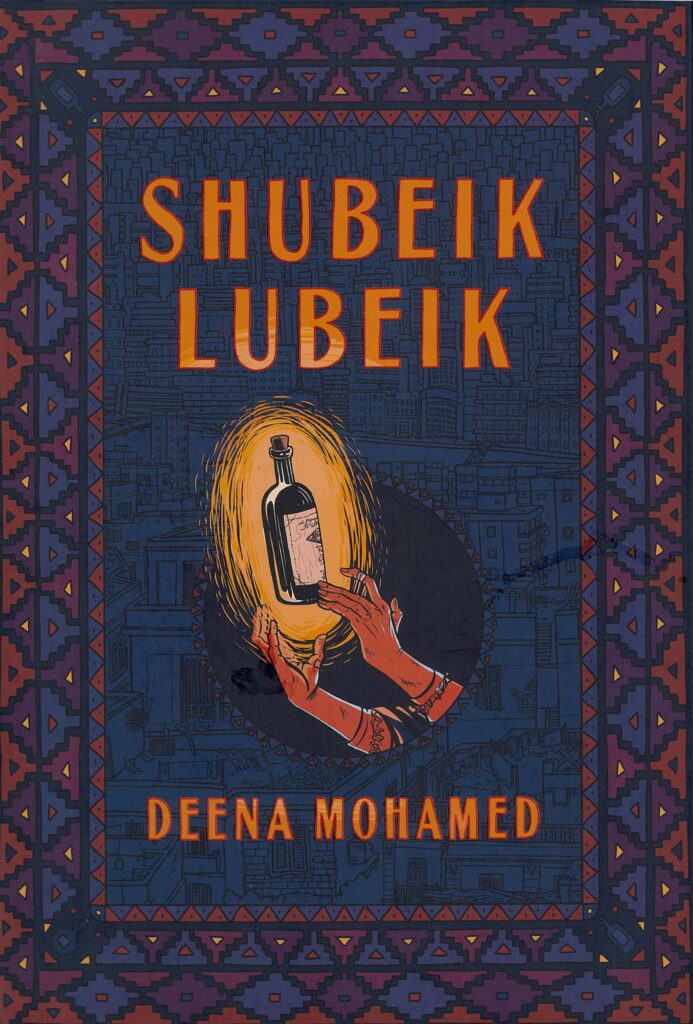
“Shubeik Lubeik,” by Deena Mohamed

“Shubeik Lubeik” Written and illustrated by Deena Mohamed. Pantheon. $35.00. English translation January 2023, 528 pages. Youth to adult.

Thanks to Fables Books, 215 South Main Street in downtown Goshen, Indiana, for providing Commons Comics with books to review.

Check Fables out online at www.fablesbooks.com, order over the phone at 574-534-1984, or email them at fablesbooks@gmail.com.

NOTE: I received a free review copy of this book from Pantheon.
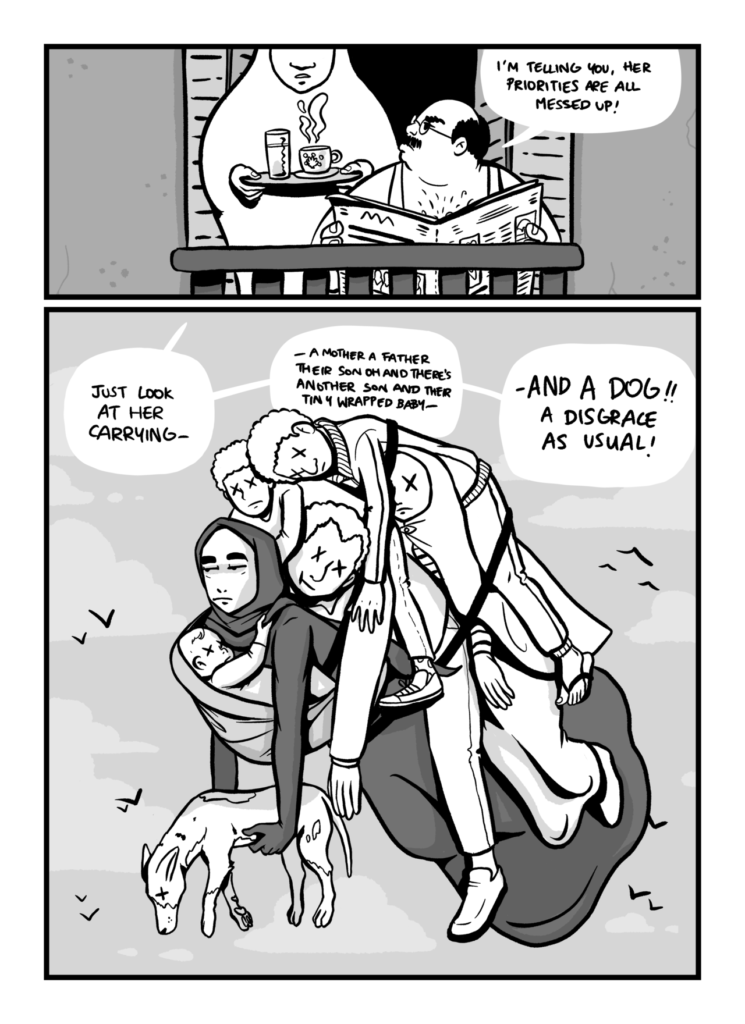
Egyptian comics artist Deena Mohamed posted her first webcomic in a 4 a.m. rage, when she was only eighteen. She had been up late fuming at a misogynist article, “Ten Things to Look for in a Muslim Wife.” It was far from her first encounter with such content, but this time she hit a breaking point—fortunately for her fans, a productive breaking point. She channeled her fury into the creation of Qahera, a Muslim Egyptian superhero who not only fights back against such rhetoric, but uses her powers to battle suffering and injustice wherever she encounters it:

Continue reading ““Shubeik Lubeik,” by Deena Mohamed”

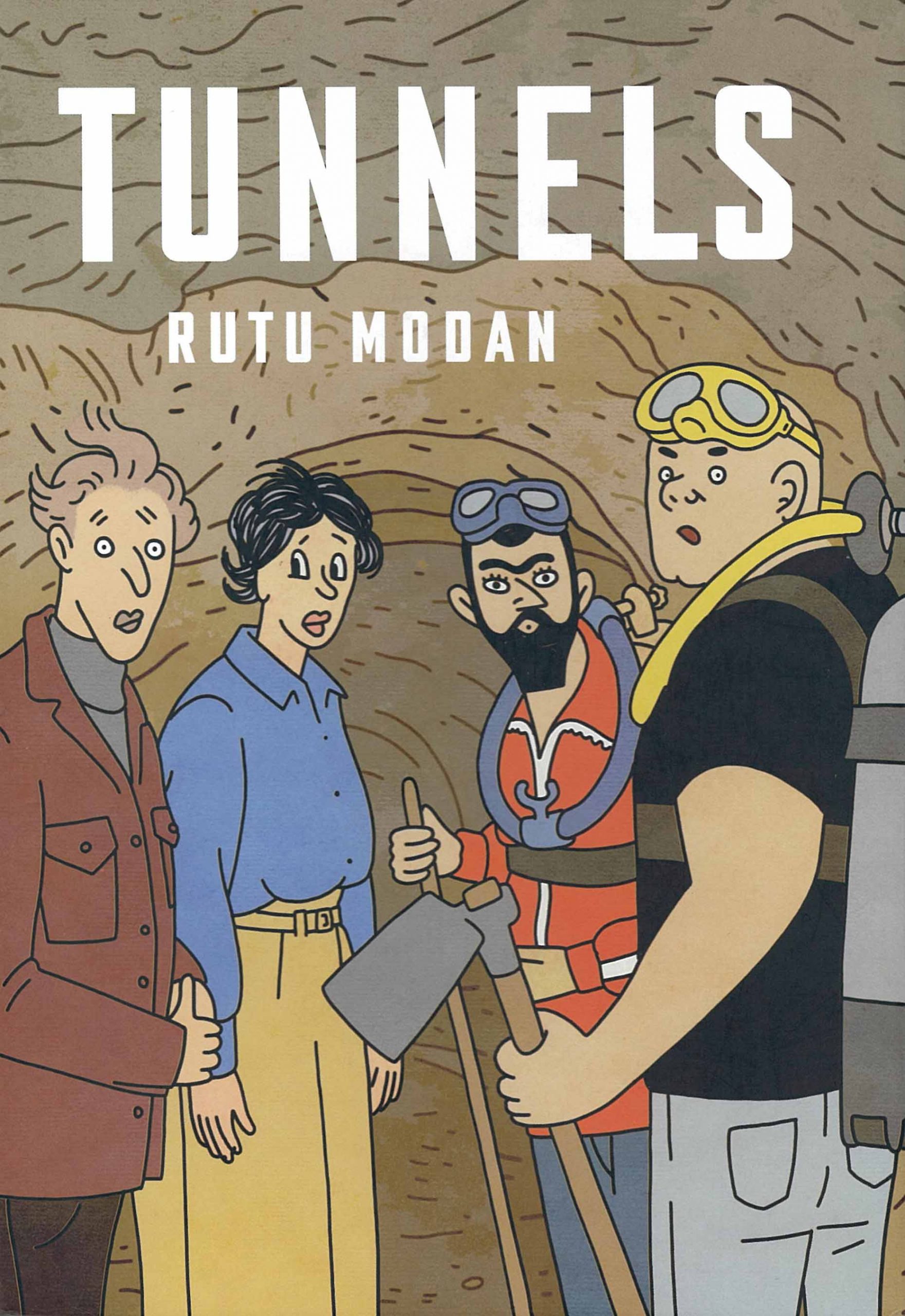
“Tunnels,” by Rutu Modan

“Tunnels.” Written and illustrated by Rutu Modan. Translated from the Hebrew by Ishai Mishory. Drawn and Quarterly, $29.95. November 2021. 284 pp. Teen to adult (but my 9 and 12 year olds loved it).

Disclosure: I received a free review copy of this book from Drawn and Quarterly.

Thanks to Fables Books, 215 South Main Street in downtown Goshen, Indiana, for providing Commons Comics with books to review.

Check Fables out online at www.fablesbooks.com, order over the phone at 574-534-1984, or email at fablesbooks@gmail.com.

“[W]e are all stuck here in this small piece of land,” said comics artist Rutu Modan in a recent CBC interview, when asked about the fraught location of her home country Israel. “Basically, we have the same target. I believe that most of the people living here want to live happily ever after. But the interpretation of the way to go there, to get to this perfect future, the ways are really different.”

Modan has never been one to shy away from difficult questions, but she doesn’t take herself too seriously, either—keep an eye out for a cow jumping over the moon in her most recent book, “Tunnels.” The romance and intrigue that Modan works into all of her comics (such as “The Property“) are never merely superficial plot devices, but a means to delve deeper. Modan’s newest story tunnels its own elliptical, surprising, and delightful narrative path as readers follow her rich, complex characters around and within their difficult, contested setting. Continue reading ““Tunnels,” by Rutu Modan”